
The AI industry just hit a turning point. After years of hype, billion-dollar investments, and promises about the future, we're seeing businesses stop experimenting and start implementing AI that delivers measurable results.
According to recent reports from PwC, IBM, and Harvard Business School, companies are shifting from crowdsourced AI pilots to focused, enterprise-wide strategies. The question is no longer whether AI can work for your business. It's whether you have a concrete plan to make it work.
The Shift from Experimentation to Implementation
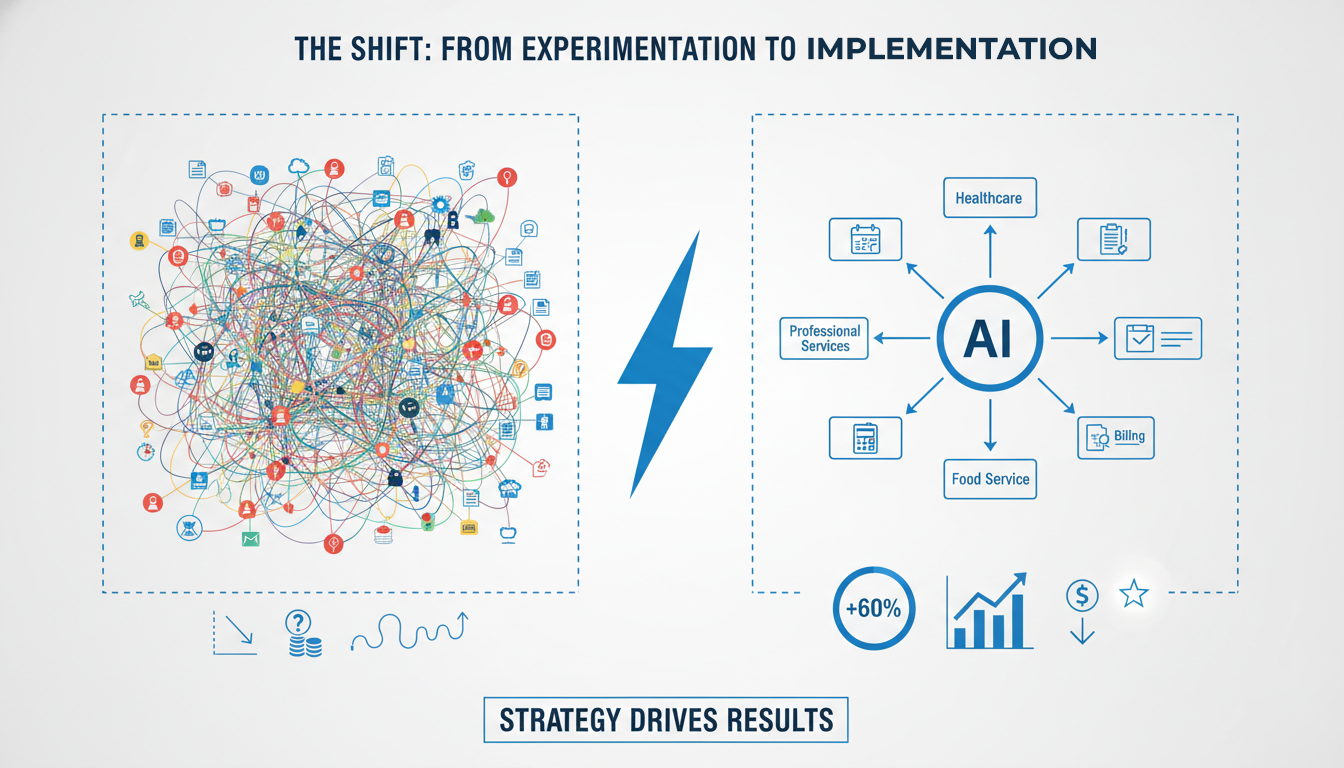
Here's what changed: businesses spent recent years testing AI tools, often with ground-up approaches where different departments independently tried various solutions. The result? Impressive adoption numbers but minimal business impact.
Now, successful companies are taking a different approach. Instead of letting every team run their own AI experiments, leadership is identifying specific workflows where AI can deliver significant ROI and implementing focused solutions.
This matters because unfocused AI spending rarely delivers value. Every dollar invested should produce measurable outcomes that accelerate business results. The companies winning right now aren't the ones with the most AI projects. They're the ones with the clearest AI strategies.
Three AI Trends Reshaping Business Operations Right Now
1. AI Agents Moving from Hype to Reality
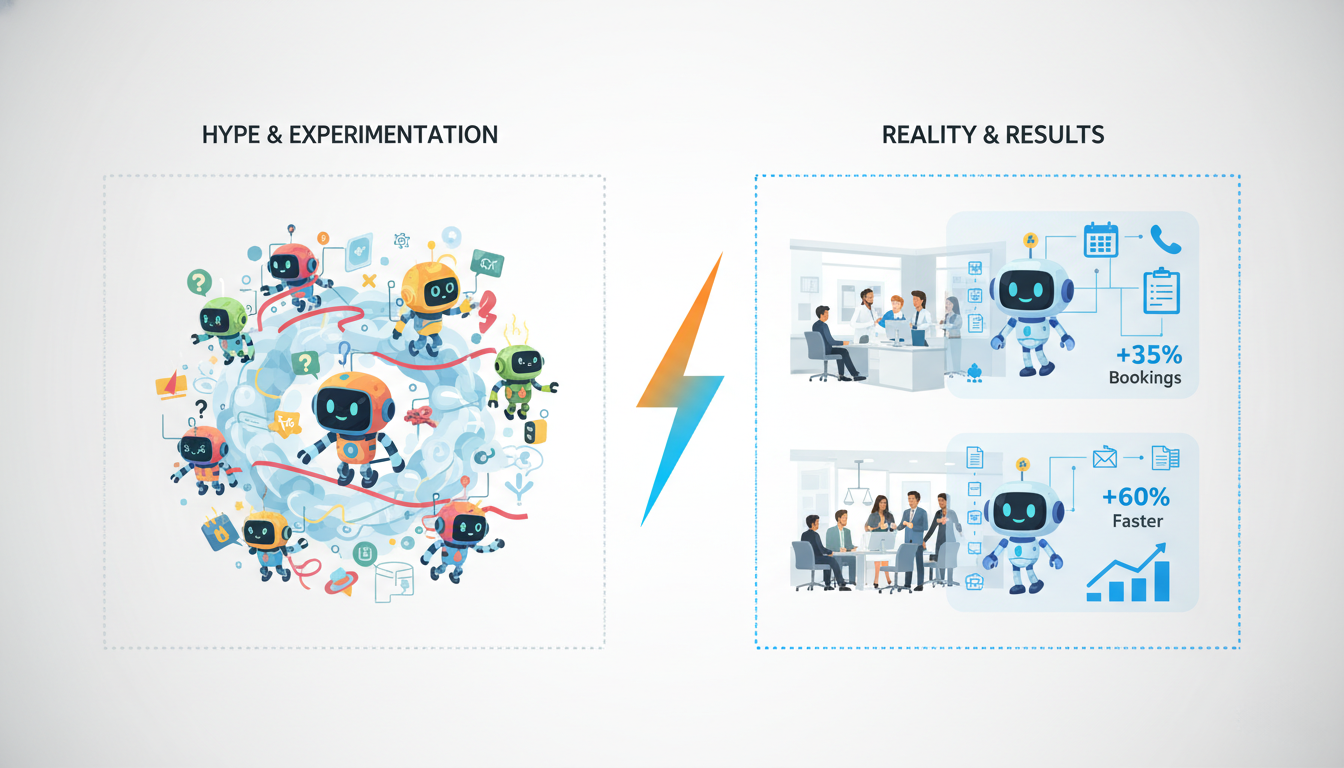
AI agents were heavily hyped recently, but most weren't ready for business-critical tasks. They made too many errors, had security vulnerabilities, and couldn't be trusted with high-stakes processes.
That's changing now. Companies understand how to deploy agents effectively: with focused use cases, proper oversight, and clear benchmarks for measuring value. Instead of trying to automate everything, businesses are identifying specific, repeatable tasks where AI agents excel.
For healthcare practices: AI agents handle appointment scheduling, insurance verification, and follow-up communications while human staff focuses on patient care. The result is 35% more bookings and significantly reduced administrative burden.
For professional service businesses: AI agents manage client intake, appointment scheduling, and follow-up communications. Law firms, accounting practices, and consulting agencies report 60% faster response times and 90% reduction in administrative errors.
2. Workflow Orchestration Over Individual Tools
Earlier AI implementations focused on individual productivity. Give each employee access to ChatGPT or similar tools and let them figure out how to use them.
The current approach is different. Companies are implementing AI at the workflow level, coordinating entire processes from start to finish. According to recent industry research, businesses are now connecting multiple AI agents to handle complex, multi-step operations.
What this looks like in practice: A dental clinic's patient intake workflow now runs automatically from initial contact through appointment confirmation. The AI system handles forms, scheduling, reminders, and insurance verification without human intervention. Staff only engage when the patient arrives for their appointment.
For product-based businesses, AI orchestrates the entire customer journey from initial inquiry through purchase and post-sale support. Sales follow-ups, quote generation, order confirmations, and customer feedback requests all happen automatically based on customer behavior and business rules.
3. Smaller, Specialized AI Models Outperforming Generic Solutions
One of the biggest recent shifts is the move away from massive, general-purpose AI models toward smaller models fine-tuned for specific business applications.
According to AT&T's chief data officer, fine-tuned small language models are becoming the standard for mature AI enterprises because they match larger models in accuracy while being significantly faster and more cost-effective.
This matters for businesses because it means AI solutions can be customized for your specific industry, customer base, and operational needs without requiring massive computational resources or costs.
What Successful AI Implementation Actually Looks Like
Based on recent research from PwC and Harvard Business School, here's what companies are doing differently:
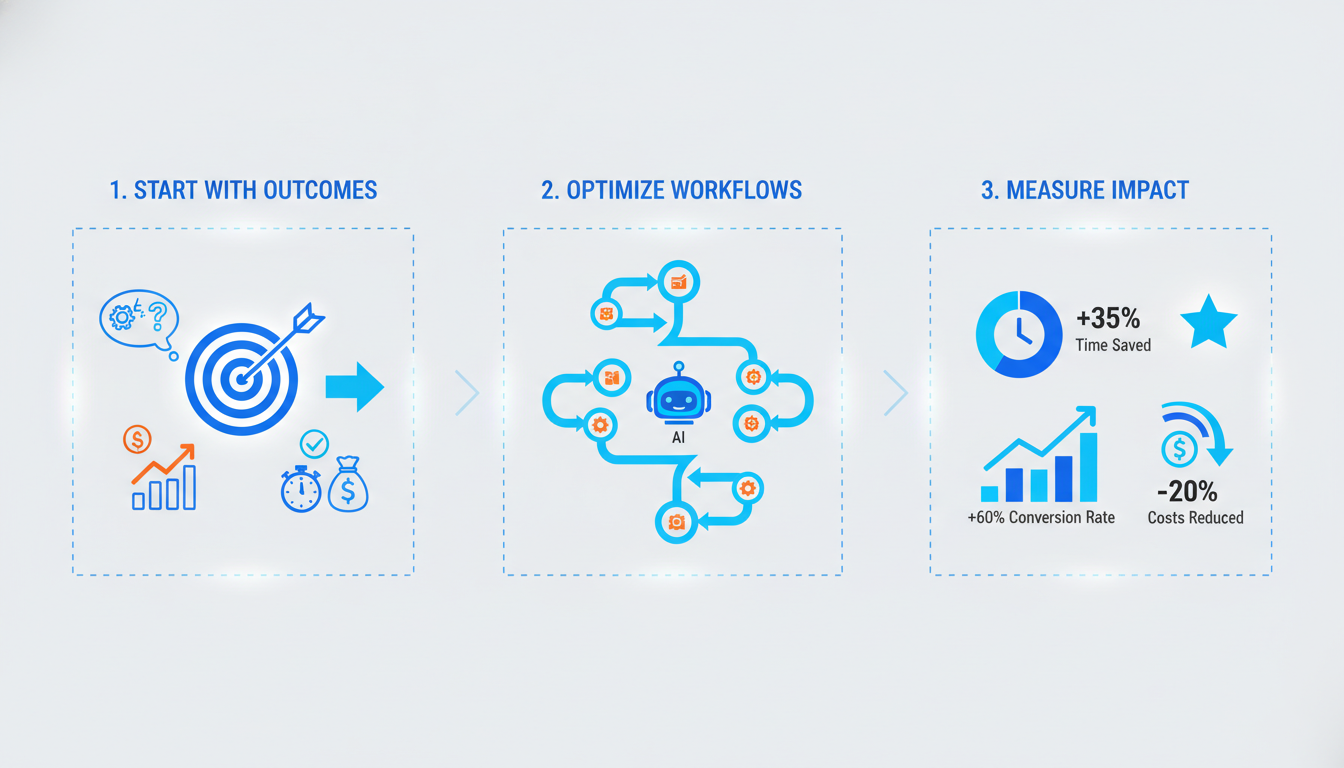
They start with business outcomes, not technology. Instead of asking what AI can do, they identify specific business problems that need solving, then determine if AI is the right solution.
They focus on workflows, not individual tasks. Rather than automating one step at a time, they redesign entire processes to maximize AI's impact.
They measure what matters. Concrete metrics like time saved, conversion rates improved, or costs reduced drive implementation decisions.
Why Healthcare and Professional Services Are Leading AI Adoption
Three industries are seeing particularly strong results from AI implementation: healthcare practices, professional service firms, and restaurants.
Healthcare practices benefit from AI automation because they handle high volumes of repetitive administrative tasks. Patient scheduling, intake forms, insurance verification, and follow-up communications all follow predictable patterns that AI handles efficiently.
Dental clinics and medical spas using AI patient support systems see 24/7 availability for patient inquiries, automated appointment reminders that reduce no-shows by 60%, and digital intake forms that eliminate data entry errors.
Professional service firms and restaurants leverage AI for client engagement and operational efficiency. Professional services use AI for client onboarding, project updates, and billing automation. Restaurants use AI for reservation management, customer preferences tracking, and loyalty programs.
Businesses across industries using AI for client communication, workflow automation, and service delivery report 3-5x improvement in operational efficiency and customer satisfaction scores. Service businesses see particularly strong results with automated scheduling, follow-ups, and personalized client experiences.
The Implementation Gap: Technology Ready, Businesses Not
Here's the challenge facing most businesses right now: AI technology is ready for enterprise deployment, but most organizations aren't structured to implement it effectively.
The gap isn't technological anymore. It's organizational. Companies need:
A clear understanding of which workflows would benefit most from automation
Leadership commitment to enterprise-wide strategy rather than departmental experiments
Integration with existing systems and processes
Training programs that help staff work effectively alongside AI
Concrete metrics for measuring ROI and business impact
This is where specialized expertise makes the difference. Generic AI solutions rarely deliver results because they're not designed for your specific industry, workflows, or customer expectations.
How Microswift Helps Businesses Close the Implementation Gap
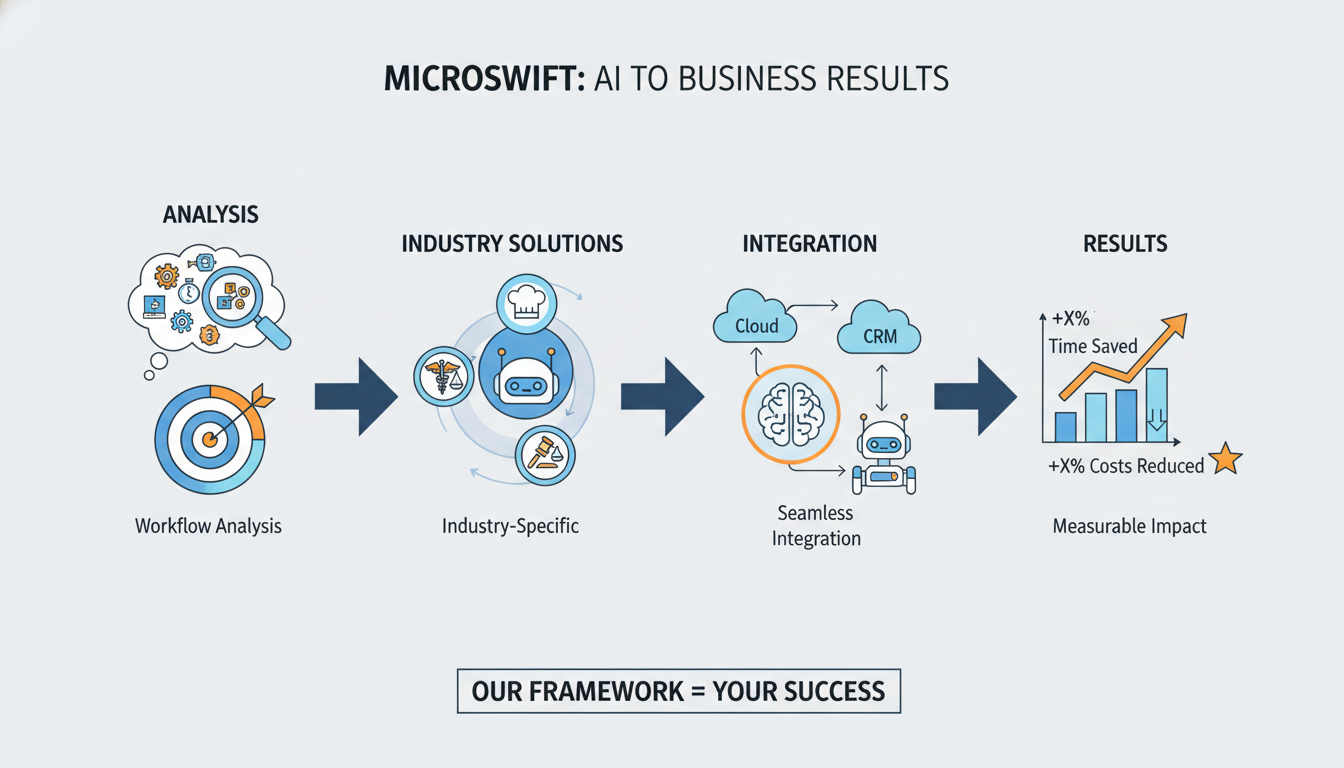
At Microswift, we specialize in translating AI capability into business results. Our approach combines industry expertise with proven implementation frameworks:
We start with workflow analysis. Before implementing any AI solution, we analyze your current operations to identify where automation delivers the highest ROI. This isn't about adopting AI because everyone else is. It's about solving specific business problems.
We build industry-specific solutions. AI for dental practices works differently than AI for law firms or restaurants. We design systems around the unique requirements of healthcare, professional services, and food service industries.
We integrate with existing systems. Our AI solutions work with your current software, not against it. Whether you're using practice management software, professional service platforms, restaurant POS systems, or CRM tools, we ensure seamless integration.
We measure results. Every implementation includes clear metrics: appointment booking rates, conversion percentages, time saved, or costs reduced. You see exactly what's working and where to optimize.
What to Do Next
If you're running a healthcare practice, professional service firm, or restaurant, now represents a critical decision point. Companies implementing AI strategically will build competitive advantages that compound over time. Those waiting for AI to become "more mature" will find themselves scrambling to catch up.
The technology is ready. The question is whether your business is.
Start by identifying one high-impact workflow in your business. Where do potential customers fall through the cracks? Where does your team spend the most time on repetitive tasks? Where could faster response times significantly impact conversion rates?
That's where practical AI implementation begins. Not with grand visions of the future, but with solving specific problems today.


