
With over 5.24 billion people active on social media globally, your potential customers are scrolling, searching, and making purchasing decisions on platforms like Instagram, Facebook, TikTok, and LinkedIn every single day.
But here's what separates businesses that generate real ROI from social media and those that waste time posting into the void: strategic management, not random activity.
What Social Media Management Actually Means
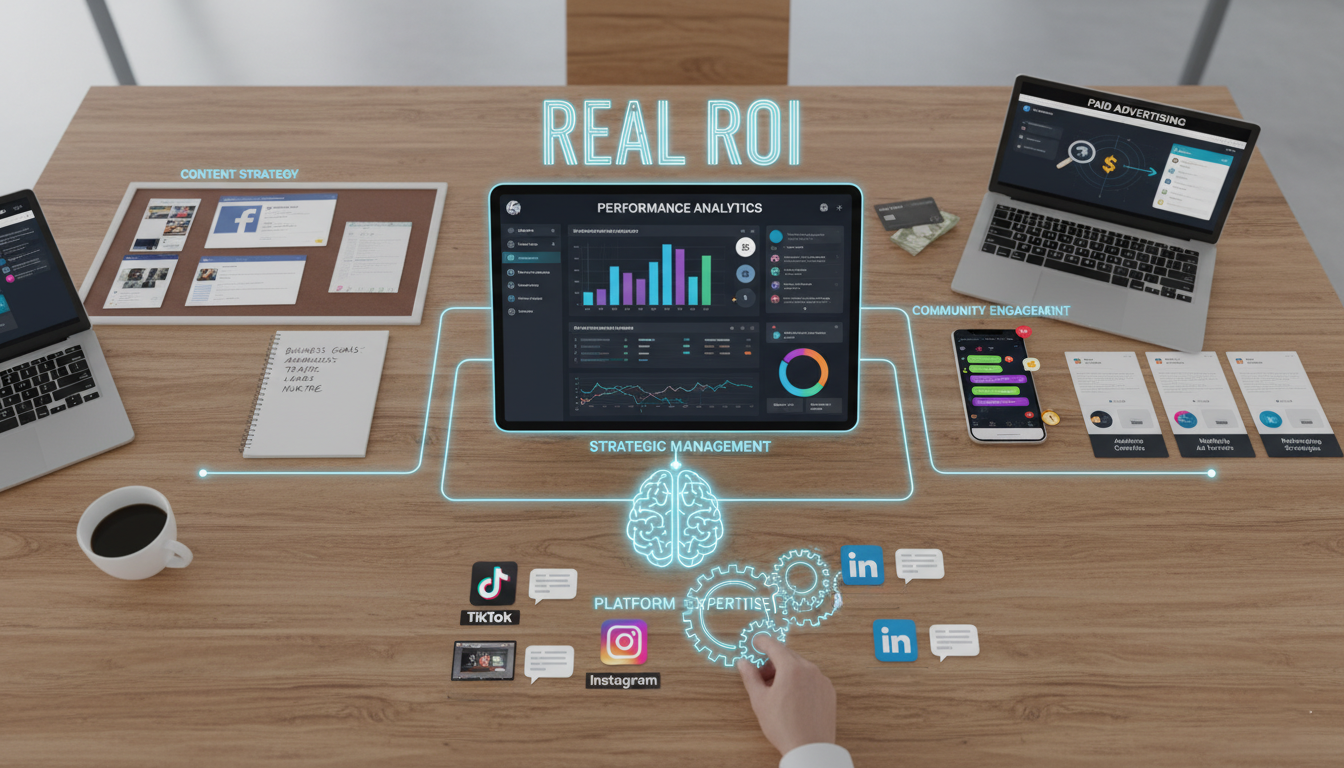
Social media management isn't just scheduling posts. It's a comprehensive approach that includes content strategy, community engagement, performance analytics, and paid advertising, all working together to achieve specific business goals.
Effective social media management requires:
Platform expertise. Each platform has different algorithms, audience behaviors, and content formats that perform best. What works on LinkedIn fails on TikTok. Instagram Reels require different strategies than Facebook posts.
Content strategy aligned with business goals. Every post should serve a purpose: building awareness, driving traffic, generating leads, or nurturing customer relationships. Random posting wastes time without delivering results.
Real-time engagement. Social media isn't a broadcast channel. It's a conversation. Responding to comments, messages, and mentions within hours, not days, builds relationships and trust.
Data-driven optimization. Continuous analysis of what content performs, which audiences engage, and what times drive the most interaction allows for strategic refinement that compounds results over time.
The Content Formats Dominating Social Media
Short-Form Vertical Video Is Non-Negotiable
Instagram Reels, TikTok, YouTube Shorts, and Facebook Reels have made short-form vertical video the dominant content format across platforms. According to recent data, video content generates significantly higher engagement than static posts.
The advantage of vertical video is repurposability. One piece of content can work across Instagram, TikTok, YouTube Shorts, and Facebook Reels with minimal adjustments, maximizing efficiency.
Educational Content Builds Authority
Content that teaches, explains, or solves problems positions businesses as trusted experts. Dental practices sharing oral health tips, retail businesses explaining product use cases, and professional services providing industry insights all build credibility that converts to sales.
Social Media Advertising: Amplifying Organic Reach
Organic reach on social platforms continues declining. Algorithm changes mean even followers don't see all your posts. Strategic paid advertising ensures your content reaches the right people at the right time.
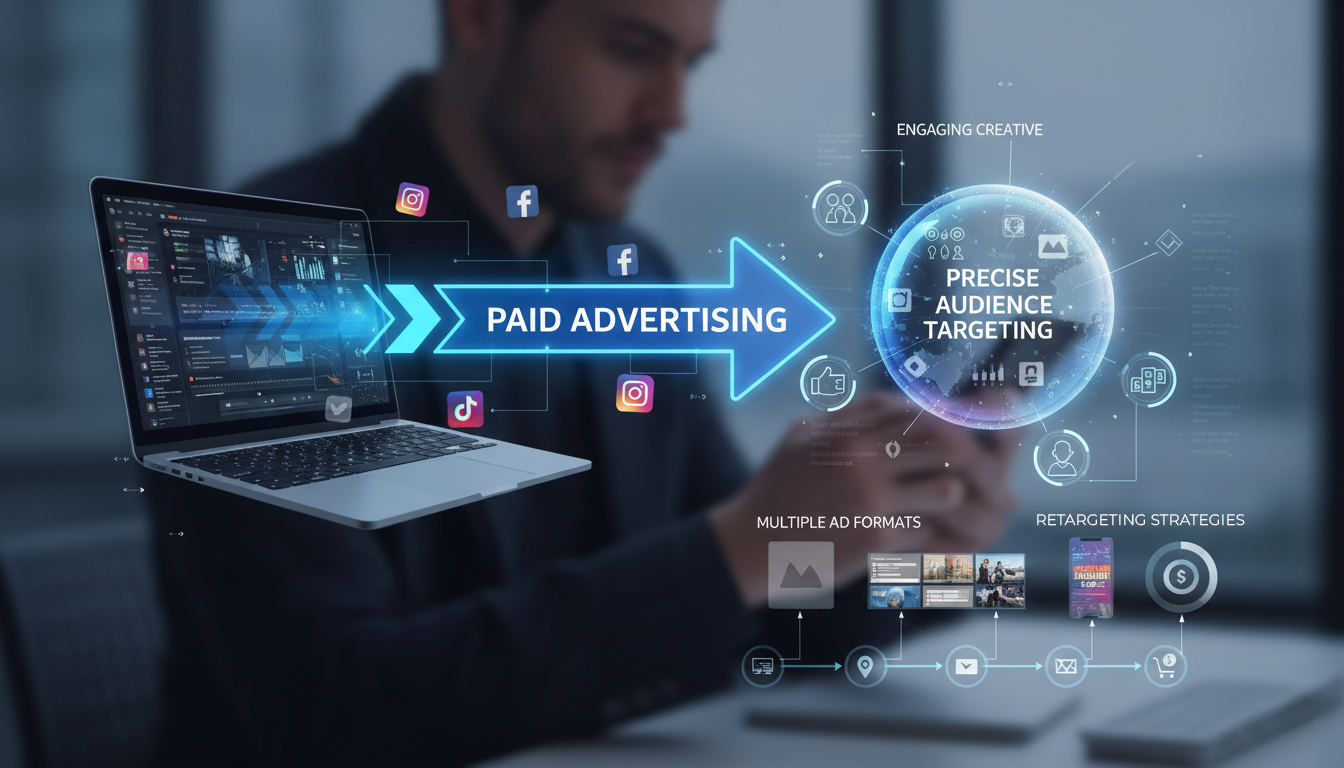
Social media ads work differently than Google Search Ads. Instead of targeting high-intent searches, social ads interrupt browsing with relevant content. Success requires:
Precise audience targeting. Platform data allows targeting based on demographics, interests, behaviors, and even lookalike audiences based on your existing customers. The more specific your targeting, the better your results.
Engaging creative that stops the scroll. Social media users scroll fast. Your ad has seconds to capture attention. Strong visuals, compelling hooks, and clear value propositions make the difference between engagement and being ignored.
Multiple ad formats. Static images, carousel ads, video ads, and story ads each serve different purposes. Testing multiple formats identifies what resonates with your specific audience.
Retargeting strategies. People rarely buy on first exposure. Retargeting ads that reach people who've visited your website, engaged with content, or watched videos drive significantly higher conversion rates.
Platform Strategy: Where Your Business Should Focus
Not every business needs presence on every platform. Strategic focus on where your audience actually spends time delivers better results than spreading thin across too many channels.
Facebook and Instagram. With 91% of businesses using Facebook and 74% using Instagram for marketing, these remain essential for most businesses. Strong for local service businesses, retail, and healthcare practices.
TikTok. Growing rapidly for product discovery and brand awareness. Particularly effective for retail businesses and brands targeting younger demographics.
LinkedIn. Critical for B2B businesses and professional services. 48% of businesses use LinkedIn for marketing, focusing on thought leadership and professional networking.
YouTube. According to recent research, 68% of marketing leaders say YouTube drives the most business impact. Long-form and short-form content both perform well.
How Microswift Delivers Social Media Results
Our social media management combines content strategy, community engagement, and paid advertising to build brands and drive measurable business results.
Strategic content creation. We produce platform-specific content that aligns with your business goals. From short-form video to educational posts to behind-the-scenes content, everything serves a strategic purpose.
Targeted advertising campaigns. Our paid social campaigns combine precise audience targeting with engaging creative and strategic retargeting to generate leads and sales at profitable costs.
Performance analytics. Monthly analysis shows what's working, what audiences engage most, and where to optimize. Data drives decisions, not guesswork.

Real Business Impact from Strategic Social Media
Our clients see measurable results. Dental practices report 40% increases in appointment bookings from social campaigns. Retail businesses experience 200% growth in online sales from targeted social advertising. Professional service firms generate consistent qualified leads month after month.
These results come from strategic management, not random posting. Content that serves business goals, engagement that builds relationships, and advertising that reaches the right people at the right time.
Stop Posting Without Strategy
Social media offers incredible opportunities for business growth. But success requires more than posting occasionally when you remember. It requires strategic content, active engagement, targeted advertising, and continuous optimization based on performance data.
The businesses winning on social media are those that treat it as a core marketing channel deserving strategic investment, not an afterthought handled whenever there's spare time.


