
When potential customers are actively searching for exactly what you offer, do you want your competitors' ads appearing above your organic listings? Or do you want to be there, front and center, when purchase intent is highest?
Google Search Ads remain the highest-converting paid advertising channel because they target people at the exact moment they're looking for solutions. The average return is $2 for every $1 spent, but businesses that implement strategic campaigns see returns of 5x to 8x.
What's Changed in Google Ads Recently
Google has significantly increased automation and AI integration in its advertising platform. While this creates opportunities for better performance, it also means campaigns require more sophisticated strategy to avoid wasted spend.

Smart Bidding Requires Smarter Setup
Automated bidding strategies like Target CPA and Maximize Conversions can deliver excellent results, but only when given quality data. According to recent industry research, campaigns using enhanced conversion tracking with value-based bidding see 23% better ROI than those relying on basic conversion tracking.
The key is feeding Google's AI the right signals: accurate conversion tracking, qualified lead values, and clear performance goals. Generic setups that treat all conversions equally waste budget on low-value clicks.
Keyword Strategy Evolution
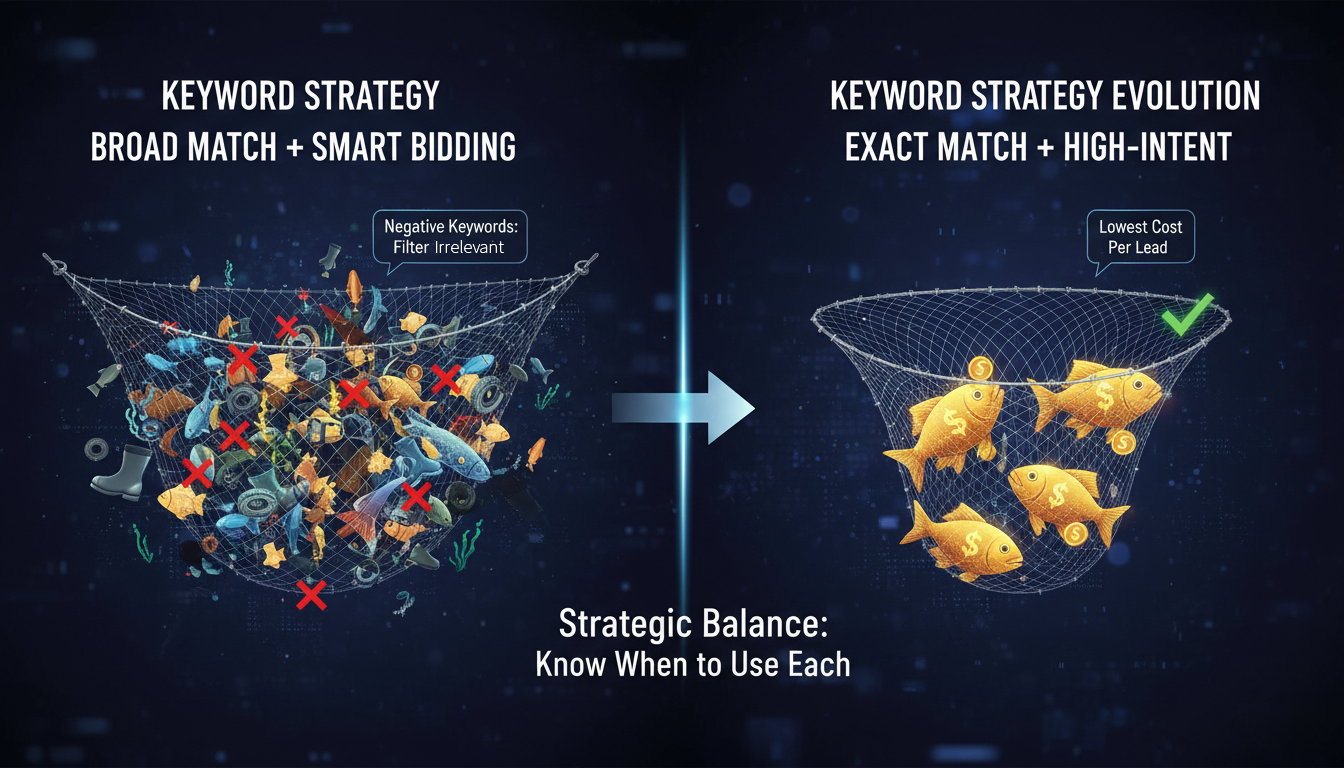
Broad match keywords combined with smart bidding have become the industry standard. But success requires extensive negative keyword lists to prevent budget waste on irrelevant searches.
For niche markets like dental practices or specialized retail, exact match keywords for branded terms and high-intent searches still deliver the lowest cost per lead. The strategy isn't choosing between exact and broad match. It's knowing when to use each.
Responsive Search Ads Performance
Google's data shows that improving Responsive Search Ad strength from Poor to Excellent can increase conversions by 15%. But high ad strength requires using all available headlines, incorporating keywords naturally, and providing variety for Google's algorithm to test.
The best-performing ads clearly communicate unique value propositions. Don't just describe what you offer. Explain why your solution stands out from competitors.
Campaign Structure That Drives Results
Proper campaign structure makes the difference between profitable advertising and wasted budget. The most effective structure separates campaigns based on business priorities and customer intent.
Brand campaigns. Always run separate campaigns for your brand keywords. Competitors bid on your name. If you don't protect your brand, you lose clicks to businesses offering inferior solutions. Brand campaigns typically convert at 30% to 50% higher rates than non-brand campaigns.
High-intent campaigns. Target searches where people are ready to buy or book. For dental practices, this includes terms like 'emergency dentist near me' or 'dental implants cost.' For retail, product-specific searches with buying modifiers. These campaigns should receive the majority of your budget.
Problem-based campaigns. Target searches where potential customers are researching solutions. These typically have lower immediate conversion rates but build awareness with high-quality prospects.
Geographic targeting. Run separate campaigns for your highest-performing geographic areas. Most niche industries have regional pockets of higher demand. Concentrating budget where conversion rates are strongest maximizes ROI.

Landing Page Alignment
Even perfectly optimized ads fail without landing pages that match user intent. Every click should lead to a page specifically designed to convert that particular search.
Someone searching for 'cosmetic dentistry' needs to land on a page about cosmetic procedures, not your homepage. Someone searching for 'buy wireless headphones' should see product options immediately, not an about page.
Landing page best practices:
Match the headline to the ad copy and search query
Provide clear calls-to-action above the fold
Remove unnecessary navigation that creates decision paralysis
Load in under 2 seconds on mobile devices
Include trust signals like reviews, credentials, and guarantees
How Microswift Maximizes Google Ads ROI
Our Google Ads management combines industry expertise with continuous optimization. We don't set and forget campaigns. We actively monitor performance, adjust bidding strategies, refine targeting, and test new approaches to improve results month over month.
Strategic account structure. We build campaigns around your specific business priorities, separating brand protection from customer acquisition and high-intent searches from research-phase queries.
Conversion tracking that matters. We implement enhanced conversion tracking and value-based bidding so Google's AI optimizes for leads and sales that actually grow your business, not just clicks and form fills.
Industry-specific expertise. Healthcare practices, retail businesses, and professional services each have unique advertising challenges and opportunities. We know which keywords convert, what messaging resonates, and how to structure campaigns for maximum ROI in your industry.
Continuous optimization. Monthly performance reviews, A/B testing, negative keyword refinement, and bid adjustments based on actual conversion data. Your campaigns improve over time instead of stagnating.
Real Results: What Strategic Google Ads Can Do
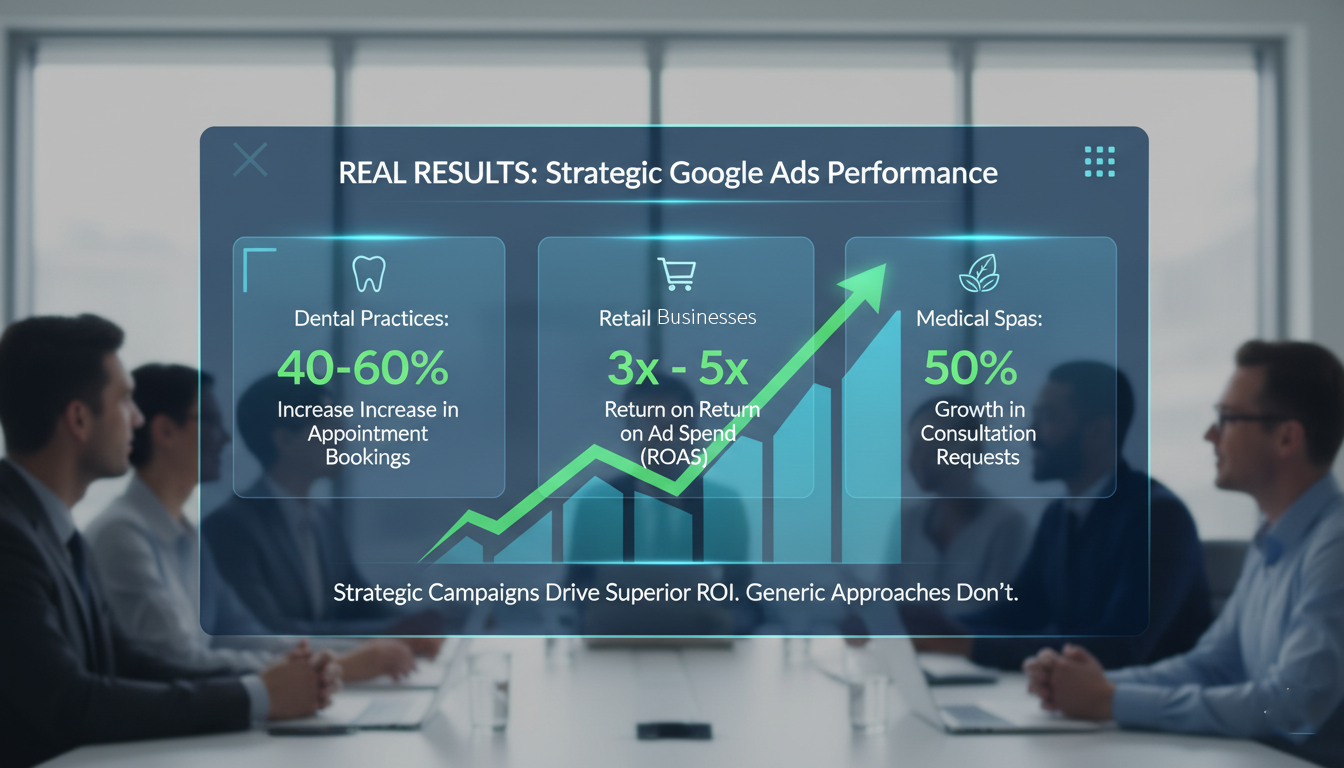
Our dental practice clients typically see 40% to 60% increases in appointment bookings within the first 90 days. Retail businesses report 3x to 5x return on ad spend. Medical spas experience 50% growth in consultation requests.
These results come from strategic campaign structure, precise targeting, continuous optimization, and landing pages designed specifically for conversion. Generic approaches don't deliver this level of performance.
Stop Wasting Budget on Ineffective Ads
If your Google Ads campaigns aren't generating qualified leads at a profitable cost per acquisition, the problem isn't the platform. It's the strategy, structure, or execution.
Google Search Ads remain the most effective paid advertising channel for businesses targeting customers with high purchase intent. But success requires expertise, continuous optimization, and strategic thinking beyond basic keyword bidding.


